
Many mothers find themselves living in a state of intellectual starvation, existing on a default diet of algorithmic noise and toxic media.
We feel it when restlessness hits at the end of the day—a sense that our potential is slowly slipping.
But a mother who is intellectually satisfied carries a completely different atmosphere.
She brings depth, original ideas, and a grounded wisdom into her home.
If you pause right now and check the temperature of your own mind, are you thriving, or are you just getting by?
Answering the calling to be intelligent starts with an honest look at your own satisfaction, and a refusal to let your mind become a “casualty of war.”
Intelligence is an essence, a daily practice, a posture, a decision to grow and not to wither.
Those who lack this precious attribute thrive is moldy, dying environments.
They get stuck in the past and when near them, you feel you’ve stepped into a carpeted bathroom from the 80s.
They barter original ideas for morsels of gossip. Instead of investing into knowledge, they parrot toxic media.
In a culture that profits from our dumbness and that preys on our numbness, here is what must be paraded: intelligence is not a fixed trait.
Intelligence is something you can decide to pursue.
But our greatest epidemic is that of distractions.
Sparkles and shimmers capture us for a harmless moment. But these valuable collection of moments add up & without realizing, we’ve invested precious time into a disappearing act while we’ve become dull.
These distractions replace our resolve, free thinking, and drive for more.
Many of us find ourselves confronted with a lack of intelligence because of the years we’ve spent wasting potential. Can we really become something we don’t feel that we are now?
Thankfully, God designed the human brain to be neuroplastic. It rewires itself based on what you repeatedly expose it to.
Feed it noise, and it becomes comfortable with noise.
Feed it depth, and it develops a taste for depth.
Feed it art, bible, and good conversation- the hunger will grow.
“An intelligent heart acquires knowledge, and the ear of the wise seeks knowledge.”
Proverbs 18:15
Intelligence is not a personality type.
It is a calling.
These are eleven ways to answer it.
1. Use AI as a Trail Guide, Not a Tour Bus
Artificial intelligence is extraordinary at showing you the door. It is not the door.
When AI answers a question for you, it has synthesized thousands of sources, flattened all the complexity, and handed you a summary mined from multiple landscapes of information.
That summary is useful, however, it is not the same as gaining understanding.
The habit worth building is this: when AI gives you an answer that genuinely interests you, follow the trail it leaves. Ask it for the clinical studies behind the claim. Ask it for the name of the researcher. Ask it for the book the theory actually came from. Then go find those things yourself.
A research paper has nuance that a summary cannot hold. A book has context that a paragraph cannot carry.
When you move from AI’s answer to its original source material, you move from being informed to becoming educated.
These are not the same thing.
Use AI as your librarian. Not your library.

2. Get on JSTOR Immediately
JSTOR is an online database of peer-reviewed academic journals, clinical studies, and primary sources on virtually every subject that has ever been seriously studied.
History, psychology, nutrition, literature, philosophy, economics, art — all of it. Researched by people who have spent careers thinking carefully about one thing.
Create a free account and you have access to one hundred articles per month at no cost. One hundred.
This is not a tool reserved for academics. It is a tool reserved for people who want accurate, sourced information on the things they are genuinely curious about — and who are tired of not knowing whether what they just read is true.
Reading from JSTOR is how you develop what the French call an opinion raisonnée — a considered, reasoned position that comes from actually knowing what you’re talking about. That voice of authority you want? It is built one well-sourced read at a time.
Stop reading summaries. Start digging deeper.
3. Write Your Emotions Down Before You Try to Think
Your brain has two primary operating modes, and they are actively competing for control right now.
The prefrontal cortex governs rational thought — logic, creativity, nuance, planning, and the ability to hold complexity without panicking. It is the part of your brain that makes you intelligent.
The amygdala governs emotional response — threat detection, fear, reactivity, and the urgent irrational conviction that everything is worse than it actually is.
Here is the problem: when the amygdala is activated, it functionally mutes the prefrontal cortex. Neuroscientist Daniel Goleman called this “amygdala hijack.” When you are emotionally flooded — anxious, overwhelmed, quietly furious about something you haven’t processed, or just sad in that low-grade way that has become your default — your capacity for rational thought is measurably reduced.
You are, quite literally, less intelligent when you are emotionally congested.
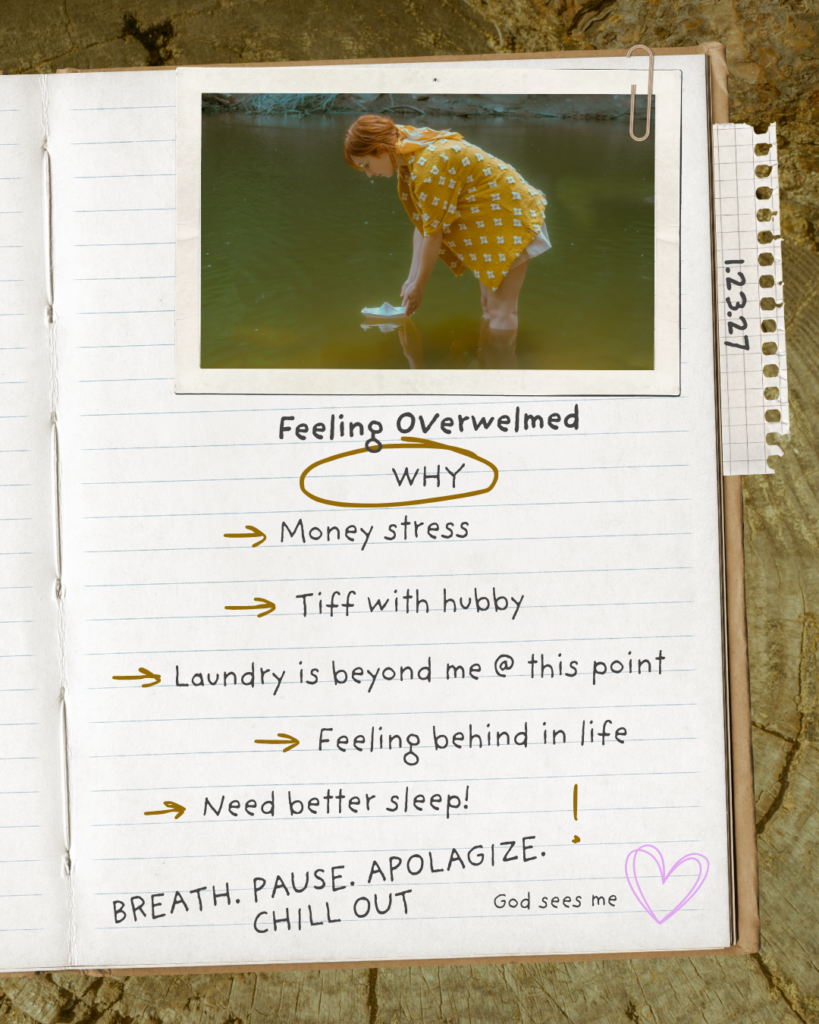
The solution is not to feel less. It is to process what you feel before you try to think.
Psychologist James Pennebaker spent decades studying expressive writing and found that examining your emotions on paper engages the prefrontal cortex, calms the amygdala, and improves cognitive performance measurably afterward. People who journaled for twenty minutes before intellectual tasks consistently outperformed those who didn’t.
Write what you feel. Name it precisely. Ask yourself why. Then put the journal down and think again.
Your best ideas live on the other side of your unprocessed emotions. Clear the clutter first.
4. Get a Library Card (This Is Non-Negotiable)
If you do not currently have a library card, you are committing a sin against your own mind. Go repent.
The public library is one of the last truly free intellectual spaces in the modern world. The books, yes — but the library is more than books. It is an atmosphere. The smell of paper and wood, the demand for silence, and the endless potential on rows of shelves is a vibe to say the least.
Simply being in an intellectually rich environment changes your behavior. You feel less rushed. The atmosphere recalibrates your mind toward depth rather than speed.
It does not so much matter what you pick up first. A novel. A history. A book offering information you know nothing about. The subject matters far less than the practice of reading and the identity you build as someone who does.
Go. Get the card. Become a library girly.
5. Aggressively Curate Your Media Diet
You are what you consume.
This is not a metaphor.
Your brain is pattern-matching every second of every day, building its model of reality based on the inputs it receives.
Read that again.
Scrolling through nonsense forces your brain to match what it’s seen.
We wonder why we are the most anxious generation. We regularly consume 100-400 videos a day. And of what??
We must become concerned for our own loss of appetite for depth.
The media diet most people maintain by default — algorithmic feeds, fear mongering bulshiiii, background trash tv, and music that offends the Spirit. This is the intellectual equivalent of living on processed food. You won’t collapse immediately. But you will slowly lose the ability to taste something better.
“…whatever is true, whatever is noble, whatever is right, whatever is pure, whatever is lovely, whatever is admirable—if anything is excellent or praiseworthy—think about such things.”
Philippians 4:8
Do right by all the genuinely creative people out there who put in the WORK. Consume their media, buy their books, read their blogs, purchase their art.
Stop eating junk food and wondering why you feel uninspired and half-alive.
6. Choose One Subject and Go Deep

Pick one thing that genuinely interests you and study it. Not surface-deep. Actually deep.
Three articles. Two documentaries. One book. A JSTOR search. Let it occupy a corner of your mind for a month and see what happens to you.
The mind that practices going deep into one subject builds transferable skills it takes everywhere — how to hold a complex argument, how to ask the right questions, how to follow a thread from curiosity to real knowledge. You become, in the best possible way, a woman who actually knows something.
Here are some starting points, ranging widely on purpose:
- From cave paintings to the contemporary
- The history of perfume/ science of scent
- The Medici family and how they funded the Renaissance into existence
- The stock market for an absolute beginner
- Classical music: what to listen for and why it was culturally revolutionary
- The history of medicine
- Women of ancient Rome
- Color theory
- Greek mythology
- The history of fashion
- The science of sleep
- Where is NASA compared to 50 years ago?
You do not have to become an expert. You have to become someone who went deeper than the headline.
That is already more than most people ever do.
7. Swap Netflix for Criterion Channel
The Criterion Collection is the gold standard of film preservation — classic cinema, international film, and art house works selected by scholars who take film seriously as an art form. Every title comes with essays, director interviews, and supplemental material that teach you how to actually watch movies as an art form.
This matters because how you watch is how you think.
A mind trained on fast, loud, plot-driven content develops very differently than one trained on films that require patience, attention, and a willingness to sit with ambiguity.
At roughly eleven dollars a month it is one of the highest-return intellectual investments available to you.
Cancel the subscription you watch out of pure habit. Replace it with the one that actually changes you.
8. Download a Vocabulary App
Language is the architecture of your thinking.
The words you don’t yet have are thoughts you cannot yet think.
Research in cognitive linguistics confirms this — vocabulary actively expands the concepts available to your mind.
Do you want a real superpower? Train your brain to think new thoughts. If you haven’t experienced this euphoric feeling recently- you will know the moment it begins to happen.
The more precise your language, the more precisely you can perceive and articulate reality.
There are emotions you are currently experiencing that you cannot fully process because you don’t have the words for them.
There are ideas you are reaching for that your vocabulary cannot yet hold. There are things God is opening in your heart that need new words to communicate rightly.
Vocabulary.com, Elevate, and the Merriam-Webster Word of the Day app are all worth downloading. Five minutes a day. Use the new word three times before the week ends. Add a vocab widget to your Home Screen. Be that girl.
Your thoughts will sharpen. Your writing will come alive. Your conversations will develop a register you didn’t know you were missing.
9. Crossword Puzzles Instead of the Feed
The next time you reach for your phone out of pure habit, open a crossword puzzle.
Crosswords activate pattern recognition, vocabulary recall, lateral thinking, and the deeply satisfying neurological reward of pulling a piece of knowledge from your own mind.
Solving a clue you weren’t certain you knew is a cognitive experience that fed content passively cannot give you.
Scroll less. Solve more. The difference in how you feel about yourself afterward is not subtle.
10. Buy a Physical Art Magazine and Look at Something Until You Understand It
Pick up an issue of Artforum, Art in America, or Juxtapoz. Find one piece that stops you. Before you read a single word about it, spend real time with it.
Ask yourself:
- what do I notice first?
- What is being repeated?
- What mood lives inside this image?
- What does the artist seem to be trying to make me feel?
- What questions am I left with that I cannot answer alone?
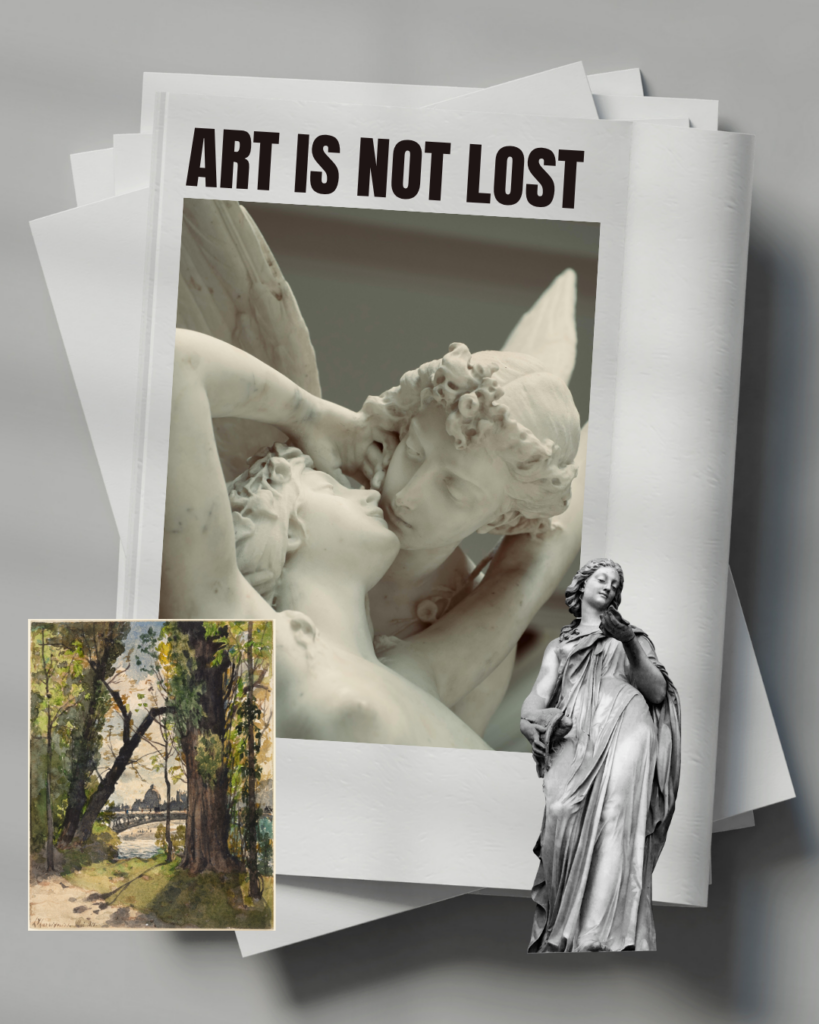
Then research it. Find the artist, the movement, the historical moment the work came out of.
Research teaches you the right questions to ask — and art teaches you how to sit with something complex long enough to actually perceive its intention.
A woman who knows how to look at art knows how to look at everything more carefully. That careful, unhurried attention is intelligence applied to the visible world.
We will have better eyes when observing creation and the mind behind its Artist. (The best one ever<3)
11. Find a Real Lecture and Actually Watch It
Yale, Oxford, Harvard, and MIT have made thousands of hours of academic lectures freely available online. These are not YouTube “explainers”.
These are full university courses — literature, philosophy, history, science, economics — taught by professors who have spent lifetimes inside their disciplines.
Search “Yale Open Courses” on YouTube. Find MIT OpenCourseWare. These are the lectures that used to cost forty thousand dollars a year to sit in, now available to any woman with a phone and twenty minutes.
Watch one episode instead of one episode of whatever you would have watched by default.
You will feel the difference immediately. Not because it is harder — though sometimes it is — but because at the end of it you will have actually learned something. And that feeling is incomparable to finishing another episode of something you only halfway cared about.
Knowledge is cumulative. Every lecture watched, every paper read, every word added to your vocabulary is another stone in the foundation.
Build something worth standing on.

Intelligence is not something you either have or you don’t. It is something you do — or don’t do — every single day.
It is the identity you assume by the culmination of consistent choices of what to read, watch, & listen to.
You were designed for wisdom. God made you with a mind that hungers for truth, beauty, and depth. Feeding that hunger is not a luxury. It is stewardship.
With all you are, reject being dumb and numb.
As always,
Stay Happy Mamas.