
There is a kind of beauty that shifts an atmosphere…
A feeling that enters a room when something beautiful walks in.
It doesn’t scream for attention…
…but it is unmistakable.
Beauty possesses an element of authority.
Why is beauty equated with power?
Because beauty never question where it stands. Beauty is sure.
Beauty doesn’t need affirmation. Beauty is aware.
It is the effect of beauty that we desire- confidence we crave, and the power to stand shameless.
If we are not in a familiar relationship with beauty, insecurity will convince us that beauty is our enemy and send us into default coping mechanisms.
We will tell ourselves that beauty must be shallow.
Self soothe, and think inwardly, that beauty is a waste of time.
Repeat in comforting, sweet tones- “beauty is always won by an unfair advantage.”
Is this God’s design- the God who is beauty itself?
If we are enemies with beauty, how can we be friends of God?
The Canon of Self-Neglect
We have tolerated a theology which operates on a scarcity mindset: that suffering is holy, effort is vanity, and the woman who prioritizes her presentation is worldly.
We have sanctified self-neglect and called it humility.
We have confused being fallow with being faithful.
Let’s be honest: letting yourself go is not a fruit of the Spirit.
It is not listed between gentleness and self-control.
There is no Beatitude for the woman who stopped caring and no spiritual reward for choosing apathy under the guise of sainthood.
When we examine biblical excellence, we find a striking emphasis on beauty.
It is woven into the very fabric of creation—from the meticulous design of the tabernacle to the ultimate restoration of all things.
We are not merely permitted to appreciate beauty; we are supposed to become it.
This is why the desire to be beautiful is not a superficial flaw; it is a hardwired craving.

Often times we barter the opportunity to experience God’s acceptance for a narrative of exhaustion. A replacement boast that claims, “I have at least suffered for God.”
We find it easier to suffer for God instead of understanding– He is moved by beauty.
We find it easier to suffer for God instead of admitting that we don’t think it’s possible to be beautiful.
The Mirror of Resentment
So when we see a woman, a mother, a girl…
Who is outwardly beautiful, the resentment underneath the surface peeks its way into our perspective of her.
But we aren’t actually angry at her; we are mourning our own unfulfilled design.
We resent in her the very thing we were created to be, but lost along the way.
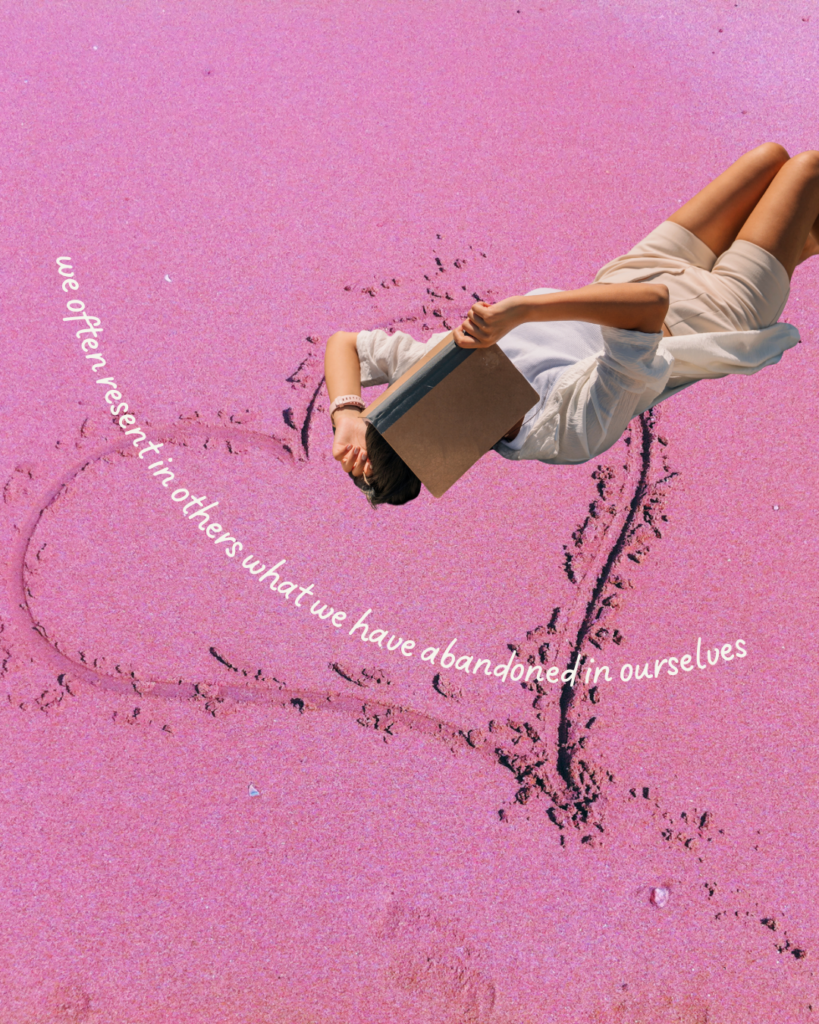
We need to have an honest conversation about the irritation we feel toward women who refuse to let themselves go. The uncomfortable truth is this: we often resent in others what we have abandoned in ourselves.
Perhaps your self-neglect is masquerading as virtue.
You might claim to be “pouring yourself out,” or simply are “too busy with what matters.”
But beneath the spiritual language, is resignation—an unprocessed grief over your own lack of beauty, covered up as godliness.
There is a common narrative that insists the more you pour out for your family, the less you should have for yourself—and that even wanting anything left over is selfish.
That lie has drained the vitality out of brilliantly stunning women.
She has inevitably become tired, resentful, snaps at her children, tolerates mediocrity, and wonders why she feels invisible.
Beauty as Order and Stewardship
You are not more spiritual because you neglect your appearance.
You are not more humble because you stopped exercising.
You are not more godly because you decided your body, your mind, and your presentation to the world no longer warrant time & attention.
True beauty—not the hollow, transient trends of social media, but real, integrated beauty—are ongoing acts of prioritization.
We must choose to prioritize beauty if we ever want to see the effects of it.
When you take care of your body and creatively portray your own unique aesthetic, you are participating in creation.
Vanity is an obsession with the surface; But we are intentionally cultivating the whole person—body, mind, and spirit—because the entire vessel belongs to God.
So are we done with resentment yet?
Because when another woman lives as proof that it is entirely possible to remain beautiful despite the demands of life, she removes our favorite excuse.
She proves it isn’t impossible. Her presence becomes a mirror, and sometimes, we would rather shatter the mirror than change our reflection.
The Assignment
This is not a guilt trip; it is an invitation into healing. Every single time we didn’t feel beautiful. Every moment we weren’t chosen. Every mindset that has put watch towers to guard us from true vulnerability.
The vulnerability that would actually admit: I want to be beautiful.
Once we make the deep internal shift (repentance) and return to God, not as someone who can work for His gaze, but as someone who has already completely captivated it, we are free to live beautiful.
You were made to embody excellence.
Your posture, your presentation, and your excitement for life should reflect the reality that you are absolutely stunning to God!
Taking care of yourself is not a distraction from a high calling—it is the evidence that you won’t be distracted from it.
Enjoy the assignment to be…
B-E-A-U-tiful!
As always,
Stay happy mamas.